Need a house loan but have a bad credit score? Here are some pointers
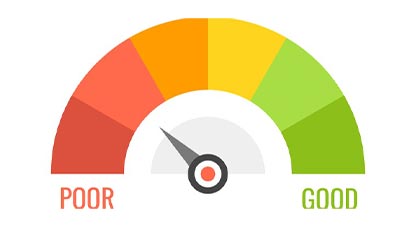
CIBIL Score – Check Home Loan CIBIL Score, Eligibility, Benefits & How to  increase CIBIL | Bajaj Finserv

Buying a house and starting a family is perhaps one of the most common desires. It will be tough to discover someone who does not want to live in his or her own home. However, in most parts of the country, the costs of apartments, flats, and villas are exorbitant. As a result, most people cannot afford to buy a house with their yearly salary or savings and must apply for a home loan to do so. Consumers may now get a home loan with a low credit score from a variety of commercial and public sector lenders in India.

Bad Credit Home Loan Overview: 

In order to qualify for a home loan, consumers must have a strong credit score. However, many people do not have a positive credit history since they are unable to repay their obligations owing to financial difficulties. It is undeniable that persons with weak credit have a tough time obtaining a house loan. They are viewed as a high-risk group by banks and financial institutions, which are hesitant to extend loans to them. As a result, such individuals must seek out alternate means of obtaining the necessary funds to purchase a home. Even though it is challenging, getting a home loan with a low credit score is not impossible.

How Can Someone With Bad Credit Get a Home Loan?

If you have a low credit score, the first step you should take is to try to pay off your bills so that your credit score will increase over time. You can apply for a house loan jointly with your spouse or wife if they have a decent credit score since this will boost your chances of getting the loan granted. If you’ve defaulted on a loan or credit card, work out a deal with the bank or financial institution, pay the settlement amount, and get a No Objection Certificate (NOC). It would be easier for you to apply for a house loan once you have received the NOC. Also, double-check your home loan application status to make sure there are no inconsistencies and that it accurately reflects your current credit history.

Approving the bank with which you have a savings account and deposits is the easiest option to receive a loan with low credit. They are more likely to issue you a loan because you have been a loyal customer for a long time. It will also help if you have a significant quantity of assets with them, including account balances, recurring deposits, and fixed deposits, among other things. They are also more likely to provide you with favorable interest rates.

When applying for a home loan with a bad credit score, keep the following in mind:

A negative credit house loan will undoubtedly provide you with several benefits. It does, however, come with a number of drawbacks. If you do not make your payments on time, your credit score will suffer even more damage, and you may be unable to acquire credit in the future. As a result, you must exercise extreme caution and make sure that you pay your loan EMIs on time, every time. You can choose auto-debit and keep your bank account filled in advance so that the EMI is automatically deducted from your account every month.

Bottom line

Customers with a poor credit score have a hard time obtaining a house loan or any credit-line approved because lenders consider them dangerous. If a consumer is unable to meet the conditions set out by the lender or other financial institution, his or her prospects of receiving a loan are further diminished. Customers who know their credit score may progressively improve it over time, however not knowing your home loan application status leaves you uninformed of your financial status and may make it difficult to obtain a loan or credit card. It is strongly suggested that you know your credit score well in advance of applying for a house loan.

A History Of The Banking Industry Between Then And Now

Banking in the past was not the same closely monitored and regulated business that it has become today with all the new technological advancements and new modes of payment like credit card payment emerging. Instead, banks operated like free markets where anyone could get into or out of the banking business without restrictions. 

A goldsmith is considered the first person to have done banking in the strict sense of the term in medieval Europe. Traditionally, goldsmiths kept their possessions in strong vaults to protect them from theft, and the residents of the town would rent the locker from goldsmiths to safeguard their money. The goldsmiths, therefore, started taking deposits, and this was in a way the birth of modern banking.

Over time, the goldsmiths realised that the deposits were usually far more than the withdrawals. Therefore, they started lending out the money they held in deposit even though it did not belong to them. This became useful for people who wanted to bill pay or buy something for which they did not have enough money at the time. It gave rise to the second primary function of modern banking, lending money.

In the modern era, money lending transformed into banking. Taking deposits and making loans became the usual business of institutions now called banks. The depositors now did not need to pay a fee to the banker to safeguard their gold. Instead, they received compensation in interest to keep their excess gold with the bankers.

It was the time of unregulated banks. Banking during this time was entrepreneurial. Anyone could set up a bank and enter the business, there was no regulation, and no license was required. This system continued till the 1600s and had become a big business.

As banking evolved, people realised that carrying large amounts of gold over long distances was unsafe and inconvenient. However, as trade and commerce expanded, it became necessary to have money long distances. So, it gave rise to banknotes issued by Private Banks. The notes were a receipt for gold deposited at the bank and which people could withdraw if the token were present.

To bring order, central banks came into existence. Central banks were banks created by a unique charter by the government and acted as bankers to the government. In addition, they were responsible for the proper functioning of other banks within their domain. Licenses, therefore, became a prerequisite to doing business in the banking industry.

Furthermore, the fractional reserve system has become an important development in the modern banking system. It translates into bankers needing to keep only a fraction of the funds on deposit.

Earlier, there was a requirement to hold a certain amount of gold on deposit. However, nowadays, banknotes from the reserves are based on which more banknotes are issued. Therefore, in some banks, their reserves are excessive, while in others, they are deficient. Because of this, banks trade their reserves on interbank markets.

Banking has undergone a tremendous change over time, we can see that especially with the new phenomenon of banking applications on mobile phones like a bill payment app. The fundamental nature of banking has drastically changed from safekeeping to money lending and now to fractional reserve banking.

Why Are Healthcare Call Centers Important in the Medical Industry?

As the world persists in struggling through a deadly virus (coronavirus), almost every industry has had to move to call center operations. This has been pretty helpful in the medical industry. Many call centers for medical practices have had to arrange agents to work from home when dealing with the increased traffic, too.

To deliver the extent of service their customers have come to expect, medical service providers lean significantly on their call center representatives and the platform they utilize.

First, let us learn about some common communication challenges in the medical field that can result in great problems.

1. Poor data management

Communication failures occur while a patient is transferred from one healthcare provider to another who is not correctly briefed about the patient’s situation. The reason can be that the patient’s healthcare data is not updated or shared with the ideal person.

2. Poor patient communication skills

Useless policies and processes can prevent contact center representatives from connecting with a patient accurately. There can be a possibility that your health care contact center is not making the best usage of interpreters, and your calls are not being resolved on time due to language barriers.

Healthcare Call Center Best Practices

Here is a “hospital call center best practice” list that is enough to make any patient satisfied when avoiding expensive healthcare issues:

1. Update the communication systems

Using the most effective healthcare contact center practices implies utilizing an outstanding medical care customer relationship management or CRM for assisting your call center for medical practice. CRM in healthcare industry helps the healthcare staff make appointments, share prescription details, handle documents, etc.

2. Keep an eye on the quality of the call

To ensure that your healthcare contact center service standards are being maintained, keep an eye on the call quality. Try to record every inbound and outbound call and ensure that the patient queries are routed to the correct departments. Also, remember to ask for feedback from your contact center representatives.

3. Increase understanding in patient communication

The most helpful contact centers are created by agents who understand how to set up healthy relationships with patients and show empathy. Your agents should be good listeners, respect the patients, let patients ask questions, and value patient priorities.

The patient portal is another essential tool in the medical field. See why patient portals are important in healthcare to know more.